How to Protect Your Pool During Hard Freezes
Houston’s freezes are brief but can cause major equipment damage if the system is not protected.
This guide covers what to do in two different situations:
- Freeze WITH power.
- Freeze WITHOUT power.
And for each situation, it explains steps for:
- Basic Automation (mechanical timers / Intermatic timers / simple on-off switches)
- Full Automation (Jandy iAqualink, Pentair EasyTouch/IntelliCenter, Hayward OmniLogic, etc.)
1. Remove Pool Cleaner (Freeze Protection):
- Remove the pool cleaner from the pool.
- Disconnect and remove the cleaner hose.
- Store both the cleaner and hose in a safe, dry location until freezing conditions have passed.
2.Freeze WITH Power (Electricity Available)
In this scenario, freeze protection relies on circulating water continuously so it cannot freeze inside pipes or equipment.
A. Systems with Basic Automation (Timer Clocks / No Freeze Sensors)
If your equipment pad does not have automatic freeze protection, you must run your equipment manually.
What to Do
- Turn on the main pool pump and any auxiliary pumps (waterfall, water feature, etc) and keep them running 24/7 until temperatures stay above freezing for at least 12–24 hours.
- Keep the heater OFF unless actively heating a the pool or spa.
- Check circulation visually at the pool / spa returns to ensure water is moving.
- Salt cell will turn off automatically when water is too cold this is normal.
- Open valves (water features, spa, returns) to ensure all plumbing lines receive flow.
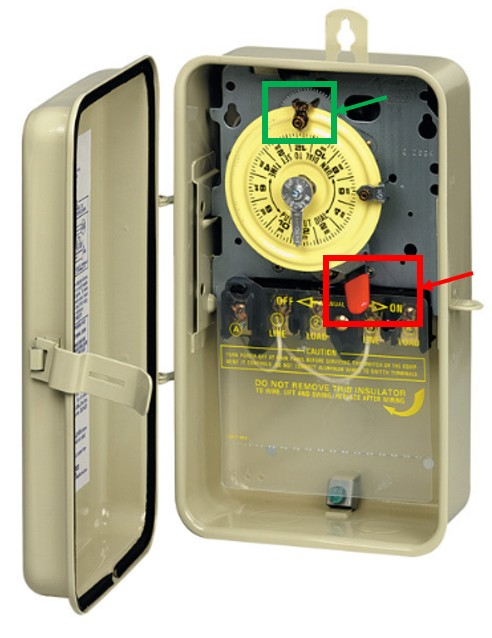
To turn a pump controlled by a timer ON, flip the lever (highlighted in red) to the ON position and remove the OFF clip (highlighted in green). This will keep the pump running continuously until it is manually turned OFF. Once the freeze event is over, reinstall the OFF clip in the same position as before.
B. Systems With Full Automation (Freeze Protection Active)
This includes:
- Jandy iAqualink / Aqualink RS
- Pentair EasyTouch, IntelliCenter, IntelliTouch
- Hayward OmniLogic / ProLogic
When properly configured, these systems automatically activate freeze protection by turning pumps on when air temperatures drop. Typically between 33°F and 44°F, depending on manufacturer settings.
Important: Freeze Protection Depends on the Temperature Sensor
Freeze protection on automated pool systems relies entirely on the air temperature sensor connected to the automation panel. If this sensor is not working correctly, the system may fail to activate freeze protection, even during freezing conditions.
For this reason, it is critical that homeowners verify the sensor is working correctly.
How to Verify Proper Sensor Operation
- Compare the outside air temperature (from a reliable weather source or outdoor thermometer) to the air temperature displayed in the pool automation system.
- The readings should be reasonably close (within a few degrees).
- If the automation system shows a significantly different temperature than actual conditions, freeze protection may not engage when needed.
Automatic Valve Actuators
For automated systems that control both a pool and a spa, it is essential that the automatic valve actuators are working properly.
These actuators allow the system to direct water flow to both the pool and the spa during freeze protection. If an actuator fails or a valve is stuck, water may circulate through only one body of water, leaving the other without flow and at risk of freezing.
Even with freeze protection enabled, faulty actuators can prevent full protection and lead to freeze damage.
What to Do
- Verify freeze protection is enabled for:
- Spa Mode
- Pool Mode
- Auxiliary Pumps
- Verify Air Temperature Sensor is operational
- Verify Automatic Valve Actuators are working
- When the temperature drops, the system will automatically:
- Turn on the main pump
- Open valves to circulate water through pool & spa
- Activate auxiliary pumps (if configured)
- Do not adjust valves manually during a freeze unless water is not flowing.
- Check visually to confirm water is circulating at returns and the spa spillway (if applicable).
- Heaters will not automatically fire, they will be protected as long as there is water flowing through them
- Salt cell will turn off automatically when water is too cold this is normal.
📞 Need help … Call us
Your main job:
Monitor water flow and ensure the system stays powered.
3. Freeze WITHOUT Power
When the power goes out, water cannot circulate. Equipment MUST be drained to prevent freeze damage. This applies to ALL systems, with or without automation.
Emergency Procedure When Power is Lost
Perform these steps as soon as possible if temperatures are below freezing and power is lost:
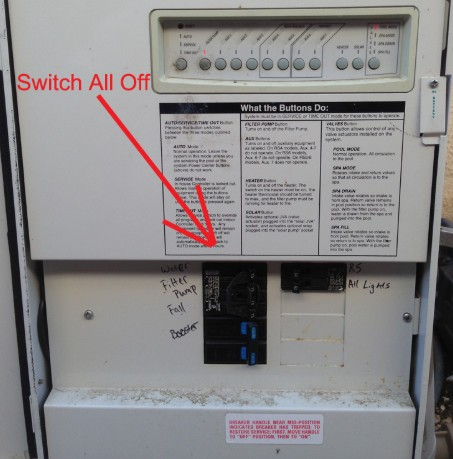
3.1. Turn the system OFF at the breakers
Turning the breakers off ensure the equipment doesn’t run without water when power comes back.
3.2. Winterize equipment:
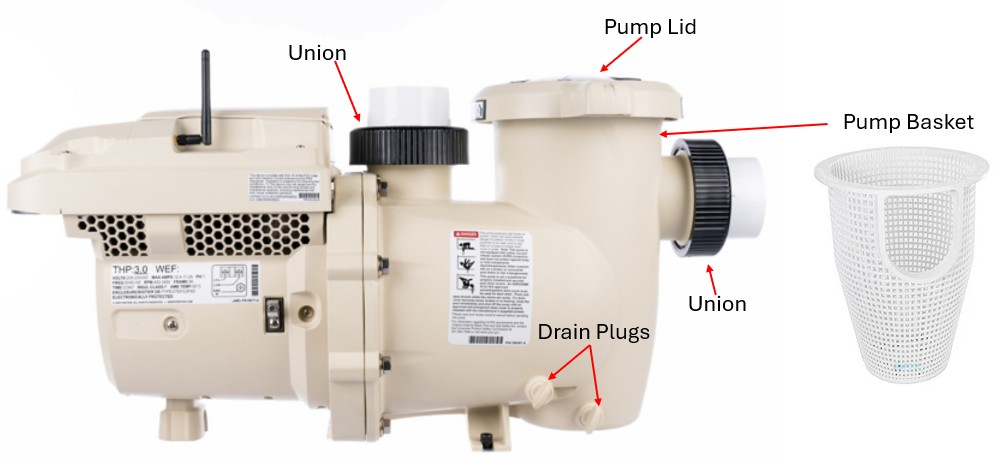
Main Pool Pump
- Remove drain plugs (usually two).
- Open the pump lid to let air in.
- Remove the pump basket
Filter
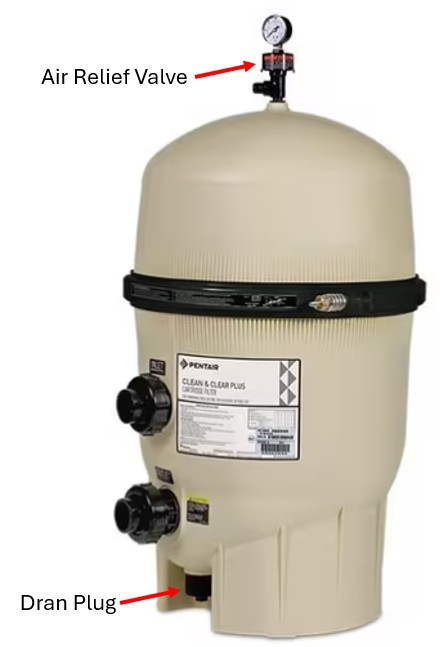
- Filters (Catridge, Sand and DE):
- Open air relief valve (at the top)
- Remove drain plug at the bottom
- Sand and DE filters: Turn multiport valve to Winterize position
All Filters (Cartridge, DE and Sand)
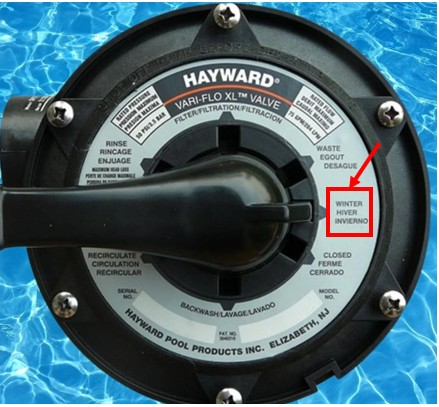
Place Multiport Valve in Winter Mode – Sand and DE Filters
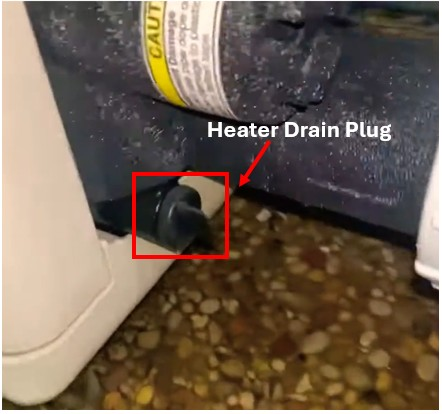
Heater
- Remove manifold drain plug.
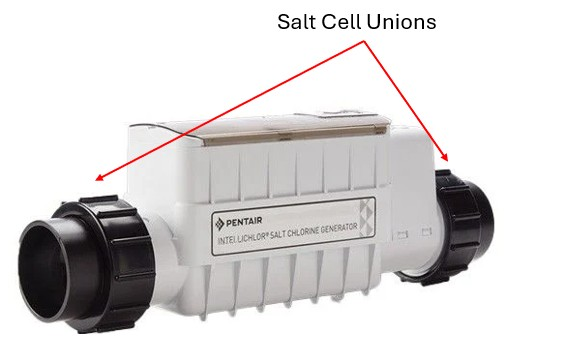
Salt Cell
- Turn Power Off
- Leave in place. It will not crack if dry.
- Loosen unions (not required, but recommended to help relieve pressure and ensure complete drainage).
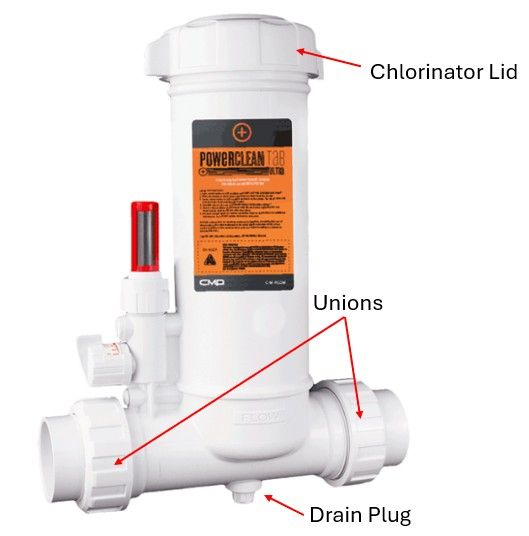
Chlorine Feeder / In-line Chlorinator
- Open the lid to release pressure.
- Drain the body if it drain plug is present .
- Loosen unions (not required, but recommended to help relieve pressure and ensure complete drainage).
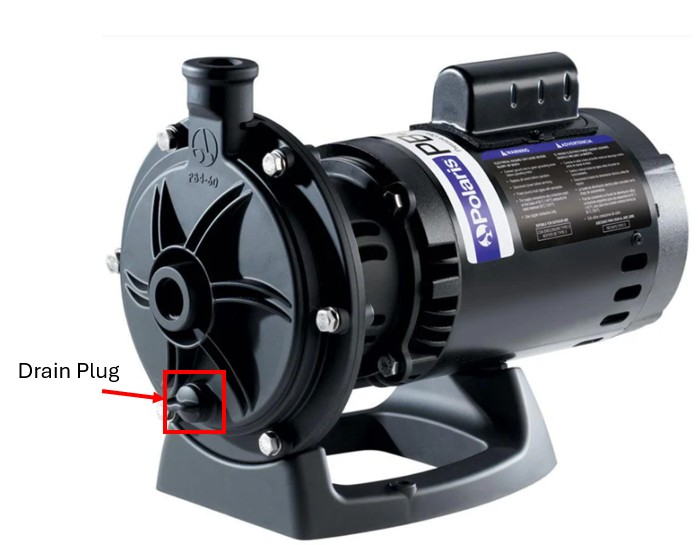
Booster Pump
- Remove drain plug.
3.3. Open valves to allow water to fall back into the pool.
Set all suction and return valves so water can drain freely.
3.4. Remove any freeze-prone items:
- Remove the skimmer baskets
4. Additional Notes
- Store all removed parts safely.
- Document (take pictures) all removed and loosen parts.
- Leave breakers OFF until water and equipment are fully thawed and reassembled.
5. Turn System Back On
- When power comes back and temperatures warm
- Reinstall all removed parts
- Tighten all loosen connections
- Close air relief valves
- Turn Breakers On
- Prime System
- Restore normal operation.
Disclaimer
The information in this guide is provided for general informational purposes only and is based on best practices for freeze protection and winterization. Following the steps outlined here does not guarantee that freeze damage will be prevented. Weather conditions, equipment conditions, power outages, sensor failures, valve/actuator malfunctions, piping layout or other unforeseen issues can still lead to damage, even when these procedures are followed correctly. Always consider consulting a qualified pool professional for advice specific to your pool system.
If you have any questions or need expert advice